As an Amazon Associate I earn from qualifying purchases. We may also earn from Viator and GetYourGuide bookings. Disclosure
Toasting whole spices
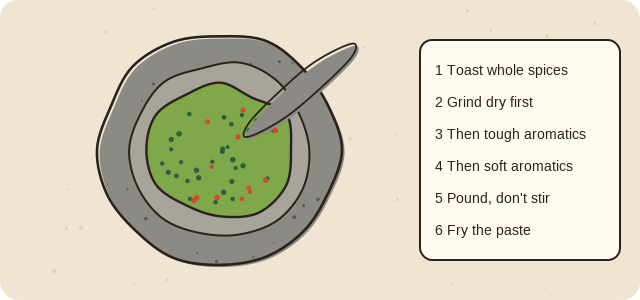
Toast cumin, coriander and peppercorns in a dry pan over medium heat, shaking, until fragrant and a shade darker, 1–3 minutes. Tip them out immediately so they don't scorch. Grind once cool.
Dried chiles
Wipe, stem and seed dried chiles. Toast on a dry comal a few seconds per side until pliable and fragrant — they burn quickly and turn bitter. Soak in hot water 15–20 minutes, then blend with some of the soaking liquid.
Pounding pastes
Pound in order from hardest and driest to softest and wettest: dry spices first, then salt with tough aromatics (lemongrass, galangal), then garlic and shallots, and finally soft ingredients like shrimp paste. Use a lifting-and-dropping motion rather than stirring, and scrape down the sides often. Pounding releases oils in a way blades don't.
Molcajete vs Thai granite mortar
A molcajete is made of rough volcanic stone and suits grinding salsas and guacamole. A Thai granite mortar is smoother, heavier and deeper — ideal for curry pastes. Som tam uses a third type: a tall clay or wooden mortar with a wooden pestle, for bruising rather than grinding.
Pantry & tools
Example listings
Chosen from product listings that match this guide. Details are paraphrased from each listing; WorldCooks hasn't used these items in a test log.
Granite mortar and pestle
ChefSofi Mortar and Pestle Set
A heavy granite mortar grinds spices and pounds pastes; larger capacities are easier for curry pastes and salsas.